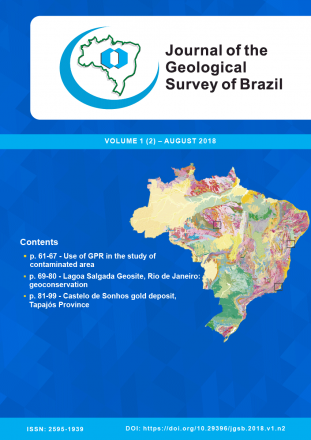
The Geological Map of Brazil at the 1:5,000,000 scale was recently updated by the Geological Survey of Brazil (SGB-CPRM), in view of the availability of several geological maps and datasets released after the previous version, published in 2001. In this context, the methodology applied to the preparation of the map is presented here, together with a proposed framework for representing the Brazilian territory in terms of geological compartments.The work began with the acquisition of vector datasets available from SGB-CPRM at multiple scales, followed by the definition of a set of guiding assumptions, including the minimum mappable area, the lowest stratigraphic hierarchies to be adopted (Formation, Group, Complex, and Suite), the tectonic structures to be represented, the prioritization of the most recent geological cartography, and the con-sistent application of a unified methodology across the entire country.Following the compilation of vector files at the 1:5,000,000 scale, it became possible to apply a con-sistent proposal for the geological compartmentalization of Brazil, based on the characterization of the main geological, geochronological, and structural units mapped and exposed in the country, as well as on previous conceptual frameworks. This approach allowed Brazil to be initially subdivided into cratons (23% of the national territory) and mobile belts and cratonic covers (17% of the territory) associated with the Brasiliano Orogeny (Neoproterozoic), in addition to the Phanerozoic covers and basins (60% of the territory).The cratons are represented by the Rio de La Plata, Luiz Alves, São Francisco, São Luís, and Amazon cratons, whereas the mobile belts correspond to the Borborema, Tocantins, and Mantiqueira provin-ces, as well as marginal belts and Neoproterozoic cratonic covers. The main representatives of the Phanerozoic covers and basins include the Amazonas, Parnaíba, Paraná, and Coastal provinces, in addition to the Parecis, Bananal, Pantanal, Sanfranciscana, Recôncavo–Tucano–Jatobá, Araripe, and Guaporé basins.